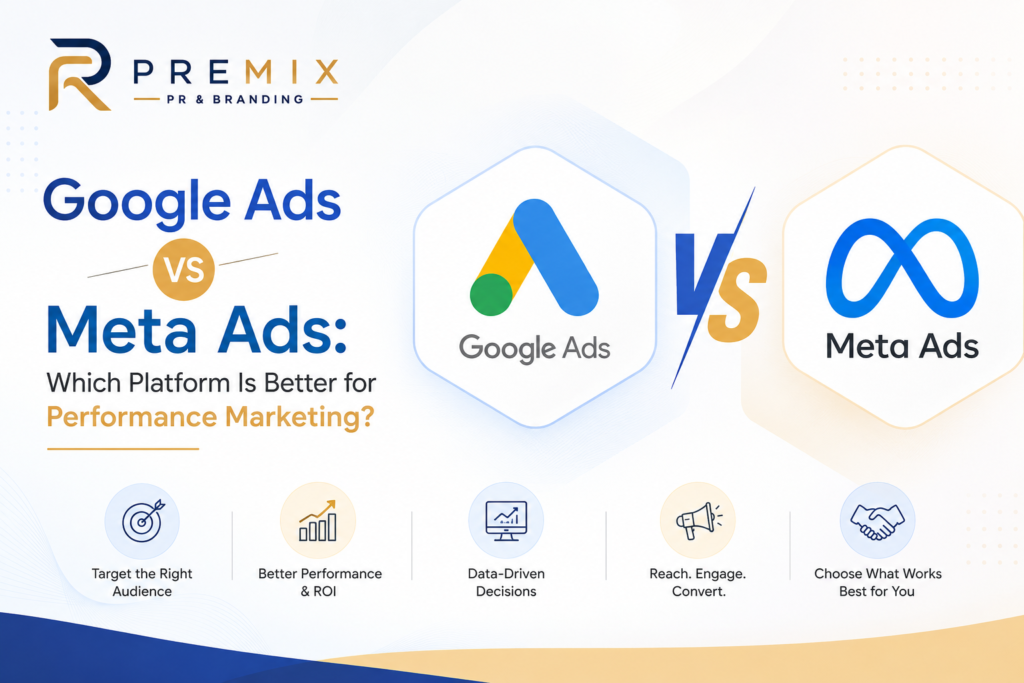
In the modern, competitive digital landscape, brands rely on paid ads to maximize their return on investment (ROI), leads, and increased sales. Two of the most significant advertising channels are Google Ads and Meta Ads. Whereas both are mostly cost-effective for performance marketing, they work with distinct purposes and appeal to audiences in different ways.
Selecting the correct channel based on your marketing strategy, business goals, target audience, and budget. Knowing each platform strongly can work to make known decisions and get excellent campaign performance made by performance marketing agency in India
Understanding Google Ads
Google Ads lets brands show ads on partner websites, Google Search, YouTube, and the Google Display Network. The channel looks for users based on their search target; hence, your ads are visible when everyone is actively looking for products or services.
This makes Google Ads highly cost-reasonable for brands working to create good and healthy leads, website engagement, and direct purchase. As users now have purchase-related intent, campaigns often provide high-quality engagement and measurable outcomes.
Google Ads is specifically better for regional businesses, service providers, eCommerce spaces, and companies looking for customers with the right buying intent.
Understanding Meta Ads
Meta Ads involve ads between the Meta Audience Network, Facebook, Instagram, and Messenger. Not like Google Ads, Meta is based on customer targeting instead of search intent.
Brands can look for users focusing on online activity, demographics, interests, behaviors, and location. This let Meta Ads be the best choice for enhancing brand awareness, working with new products, creating engagement, and developing customer relations.
Meta’s modern customer targeting and visually attractive ad formats make it better and cost-friendly for consumer-focused brands in fashion, beauty, lifestyle, fitness, food, and travel.
Google Ads vs Meta Ads: Key Differences
When both channels work with performance marketing, they are distinct in different essential ways.
Google Ads keeps customers who are consistently looking for products or services related, capable of making it right for creating immediate audience and customer conversions. Meta Ads, on the other hand, make businesses get the right customers when they start looking, making them highly cost-friendly for brand search and audience traffic.
Google mainly depends on keyword targeting, while Meta uses complete audience segmentation focused on user needs and behavior. Google Ads mostly performs well for high-intent discovery, whereas Meta Ads work with visually appealing storytelling and remarketing-related campaigns created and analyzed through performance marketing agency in India
Instead of looking at them as competing channels, many developed businesses use both at once to make a full digital marketing approach.
Which Platform Is Better for Performance Marketing?
The answer is based on your business goals.
If your objective is to create immediate sales, qualified leads, or phone calls. Google Ads is mostly the better choice, as it targets consumers with a strong purchase intent.
If your goal is to create brand awareness, enhance engagement, work on new products, or nurture the right customers, Meta Ads can provide exceptional outcomes by advanced audience focus and creative ads.
For businesses looking for better ROI, working with Google Ads and Meta Ads often creates the best and strongest performance. Google creates customers who are there to buy, whereas Meta creates awareness and makes your brand visible at all times of the customer journey.
Also Read This –
How Google Business Profile Optimization Improves Local SEO Rankings
Google Ads and Meta Ads are together important tools for performance-related marketing, but each offers many distinct ways. Google Ads enhance searching for customers actively looking for solutions, while Meta Ads make businesses network with focused, targeted consumers through deep visual content. Selecting the right channels based on your marketing objectives, consumers, and budget. Leading a performance marketing agency with expertise can make you create a better advertising approach, develop campaigns with both channels, and enhance your return on investment in 2026 and beyond.